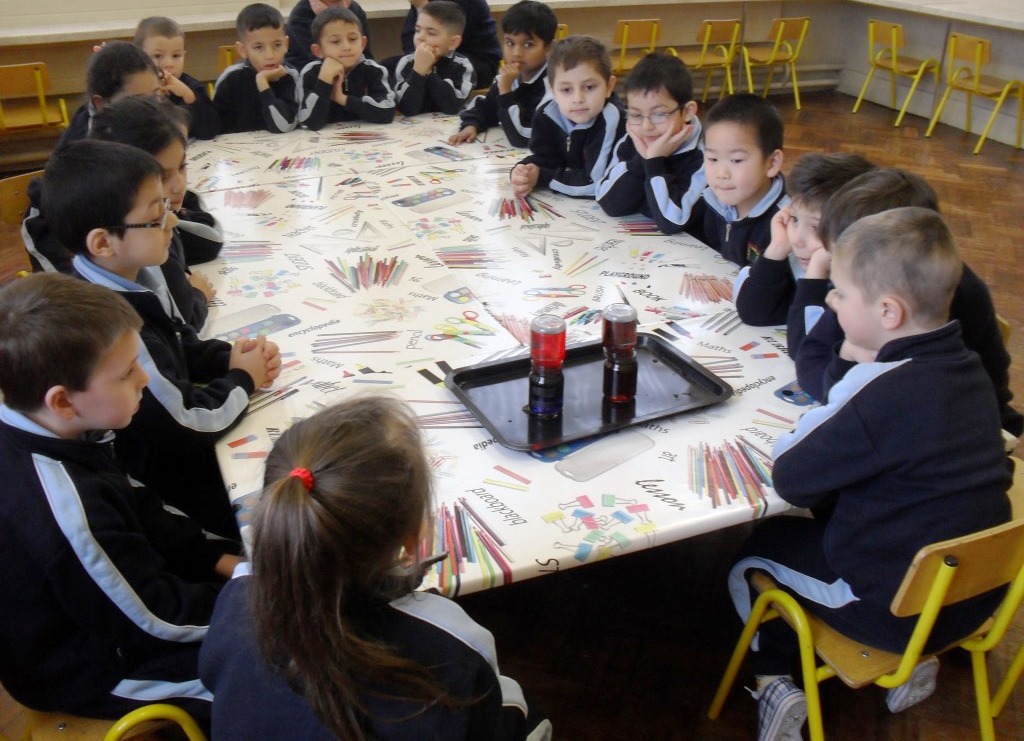
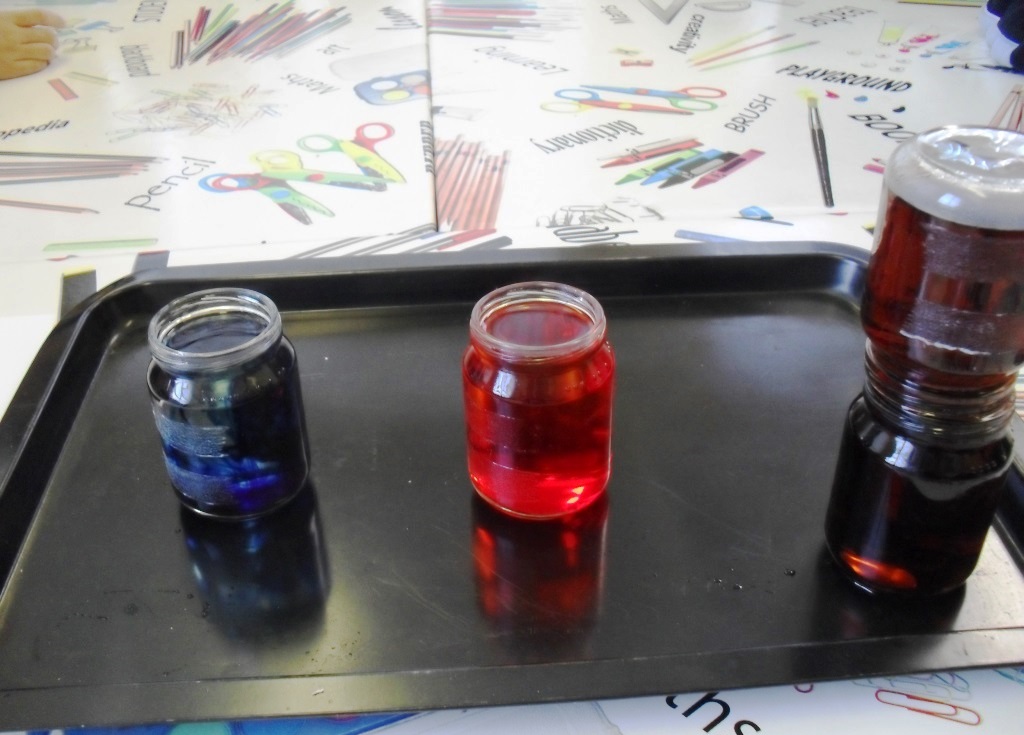
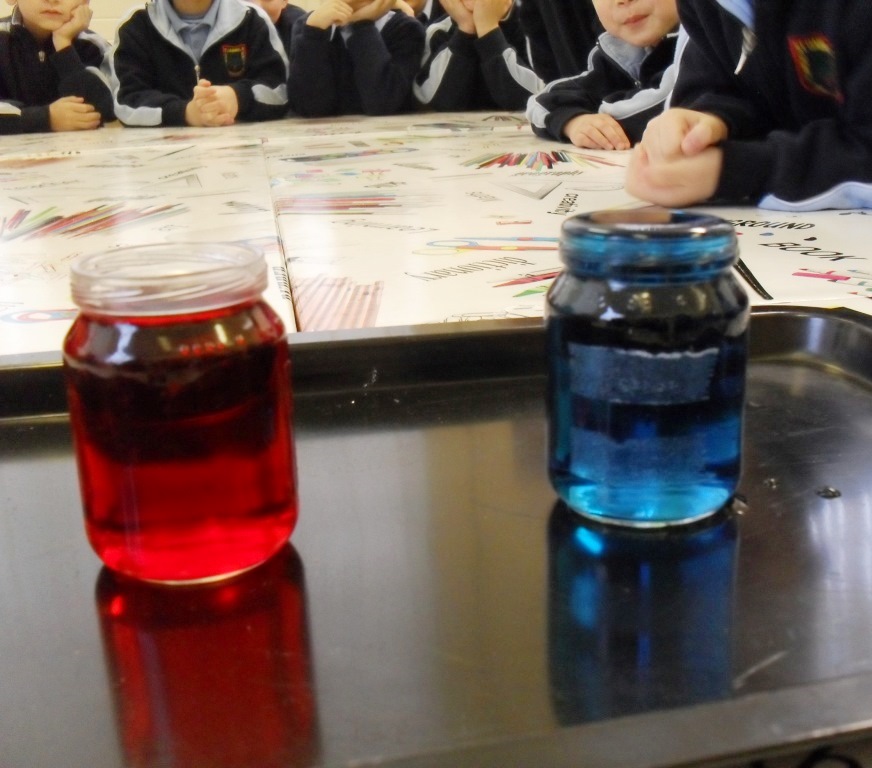
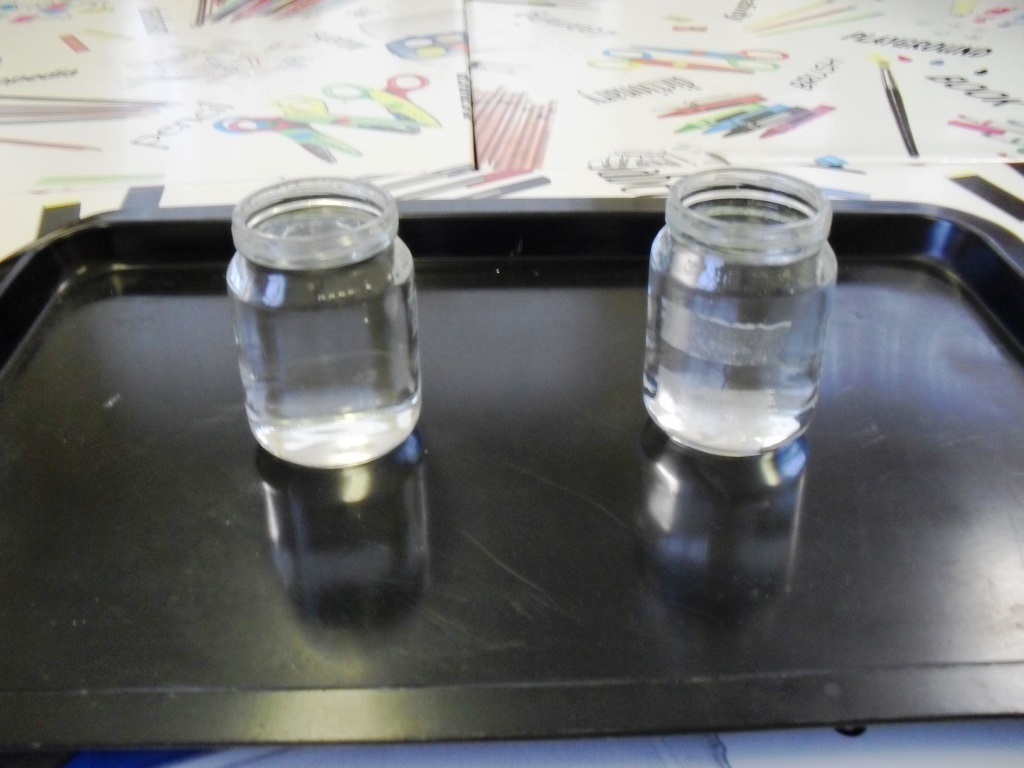
We filled one of the jars with very hot water and added a drop of red food colouring.
We filled the other jar with cold water and added a drop of blue food colouring.
We added more water to the blue jar until the water bulged over the rim of the jar.
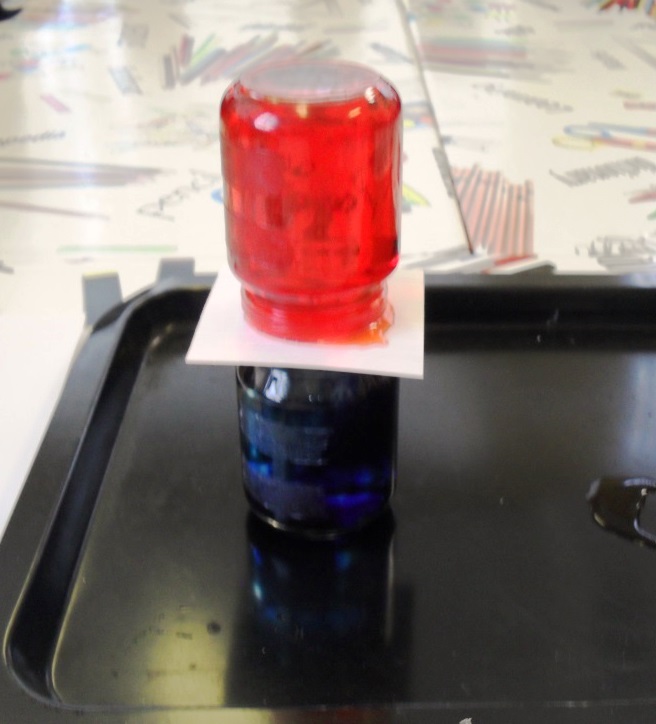
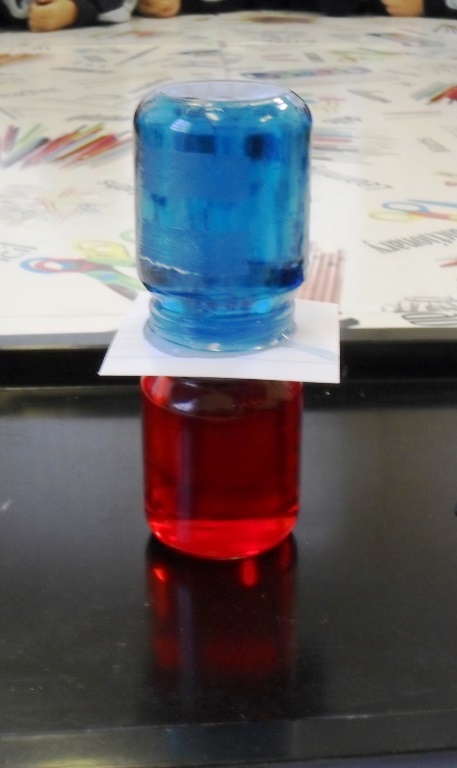
We placed a square piece of card carefully onto the top of the blue jar and tapped it gently to form a seal.
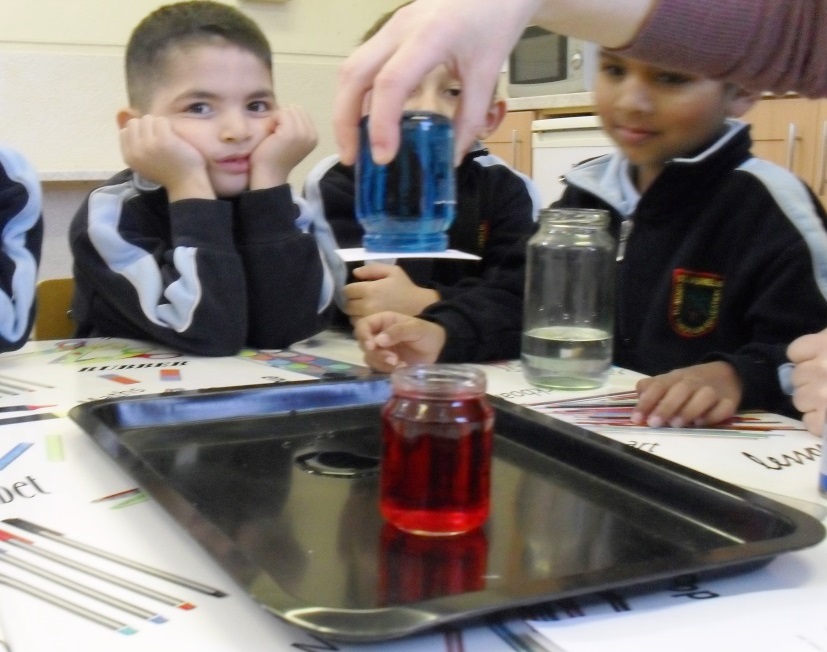
Our teacher picked up the blue jar and turned it straight upside-down. The water stayed in the jar (phew!)
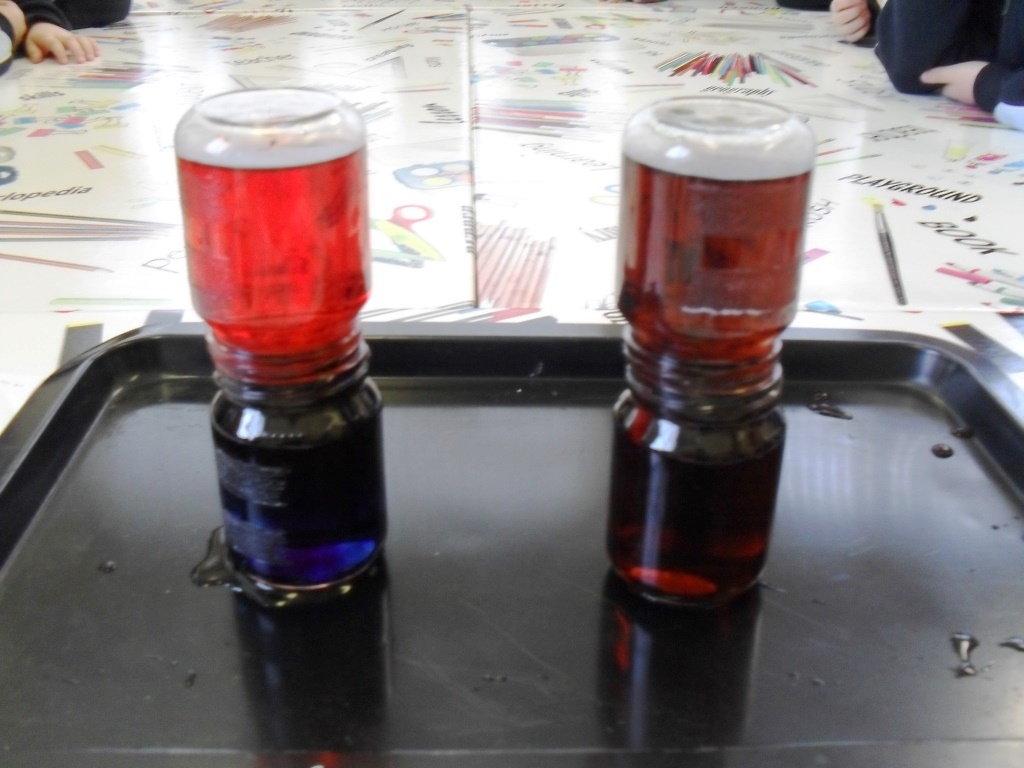
We put the upside-down blue jar right on top of the red jar.
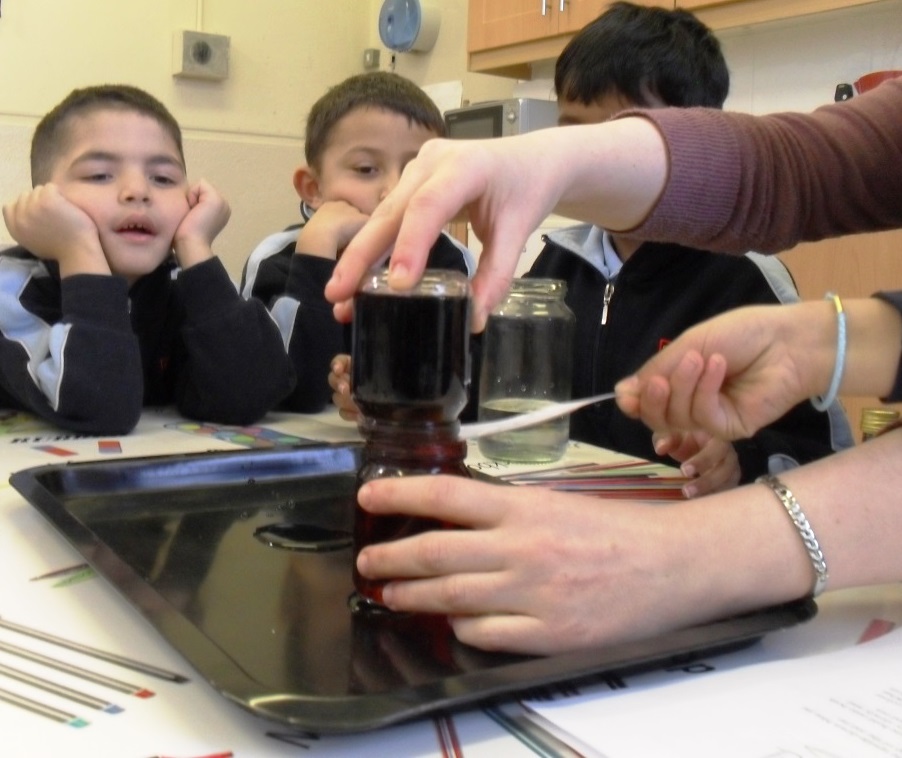
Our teacher held onto both jars while we carefully pulled the card out.
When the card came out the water in both jars got mixed up and the water turned a brownish colour.
We then started the experiment all over again but this time we filled up the jar with the red-coloured hot water to the top. Our teacher turned the red jar upside-down and put it on top of the blue jar.
This time when we pulled out the card between the two jars the hot red water stayed on top and the cold blue water stayed on the bottom.
Why?
Hot water is lighter than cold water.
In the first two jars the lighter hot water moved to the top jar and heavier blue water moved to the bottom so the colours mixed together.
In the second two jars the lighter hot water was already in the top jar so the water and colours didn’t mix.